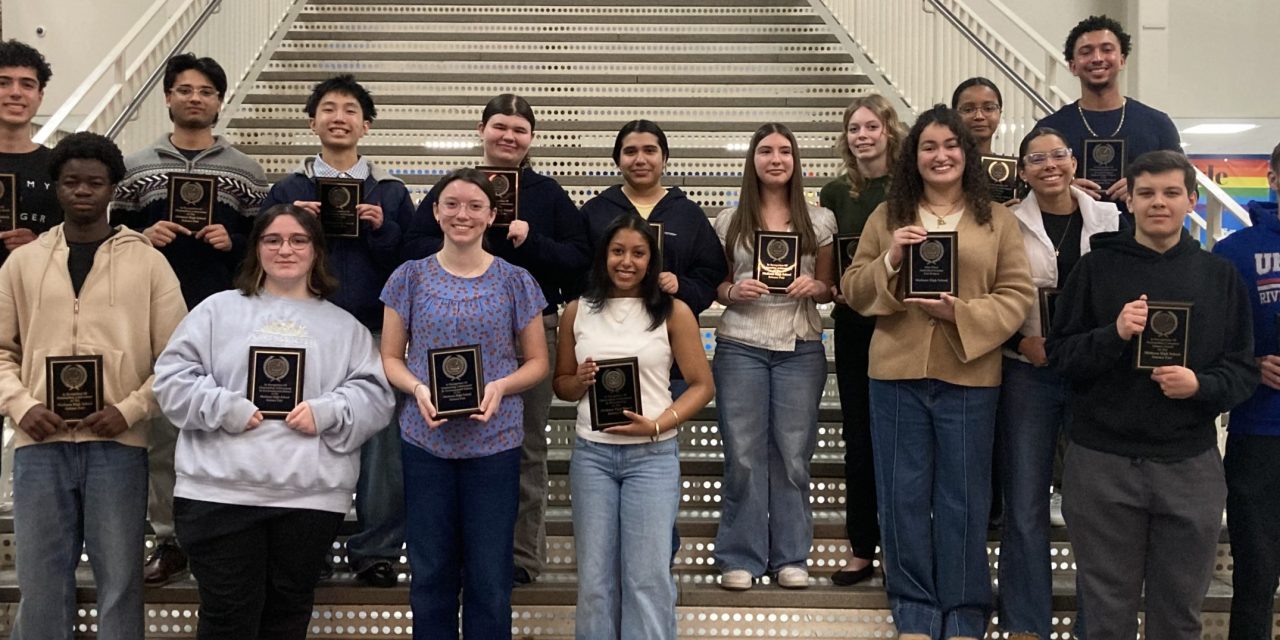
Congrats to all the participants at Methuen High’s 40th annual Science Fair! There were 78 projects on display with over 135 students participating.
“This is my 30th Science Fair and every year I’m truly impressed with the work of our students, the quality and diversity of the projects, and the passion and enthusiasm that our students display when presenting their research and articulating their findings,” noted Science Department Chairman Joe Harb on awards night, which was open to the public. “Many schools have done away with Science Fair because of the tremendous amount of time and effort required by both teachers and students. For our students that have a love for science, we feel that it’s important to allow those students to showcase their impressive talent in their favorite science discipline!”
Shout-out to all of MHS’ science teachers who guide, support and encourage these students!
Pending approved Individual Research Plan, these students will represent MHS at the Region IV Science Fair at Tufts University on March 14:
Tayyab Afzal, “Developing a Multi-stage Magnetohydrodynamic Propulsion System for Marine Applications.”
McXcellence Famisa, “How Air Pressure Affects Performance.”
Styliani Mitsopoulos, “The Effect of Different Substances on Yeast Fermentation.”
Giana Moore, “Green Shield: Formulating and Testing a Natural Eco-Friendly Sunscreen.”
Taking first place in the MHS Science Fair is senior Yasmine Bridaa with “Watch Out! Your Computer is Overheating!” where she noted that AI is actually bad for the environment and she analyzed media-popularized solutions to data-center-facilitated global climate change. She even coded software to display solution effectiveness! Yasmine (who also placed first in 2023) will represent MHS at the State Science Fair on April 9 at the DCU Center in Worcester.
Second place went to Anwar Mamdouh for “Beyond Bulk: Unraveling the Cellular Landscape of Human Lung and Prostate Tissues.”
Other winners and their projects are:
BIOLOGY: Emma Ripley and Leena Wassif, “How Does Urbanization Impact Water Quality?”
CHEMISTRY: Yeniela Villaronga, “Biodiesel from Vegetable Oil: Yield and Fuel Properties.”
PHYSICS: Alvin Nguyen, “Utilizing Energy Return to Optimize Footwear Midsoles.”
ENVIRONMENTAL SCIENCES: Jillian McSweeney and Jacqueline Mastro, “Green Screen: Protecting Your Skin and the Environment.”
COMPUTER SCIENCE (new division): Adrian Borges and Anthony Czyzewski, “OptiTask.”
BIOTECHNOLOGY: Melany Reyes and Laritza Santana, “Does it Grow in the Garden or the Lab?”
ENGINEERING: Sabiel Sanchez, “No Stick, No Trip.”
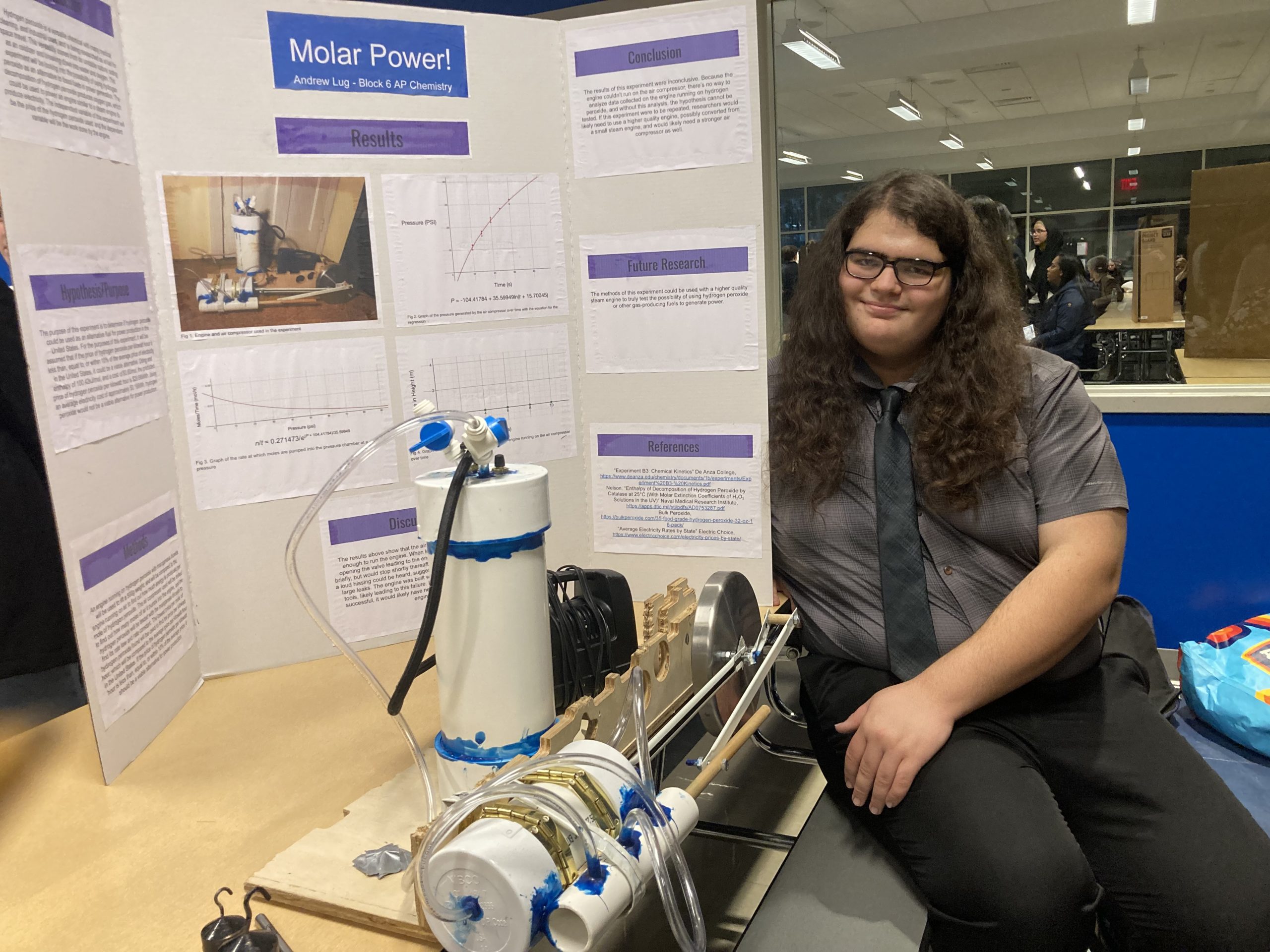
Andrew Lug’s “Molar Power” chemistry project used a homemade steam engine to test the possibility of using hydrogen peroxide to generate power.
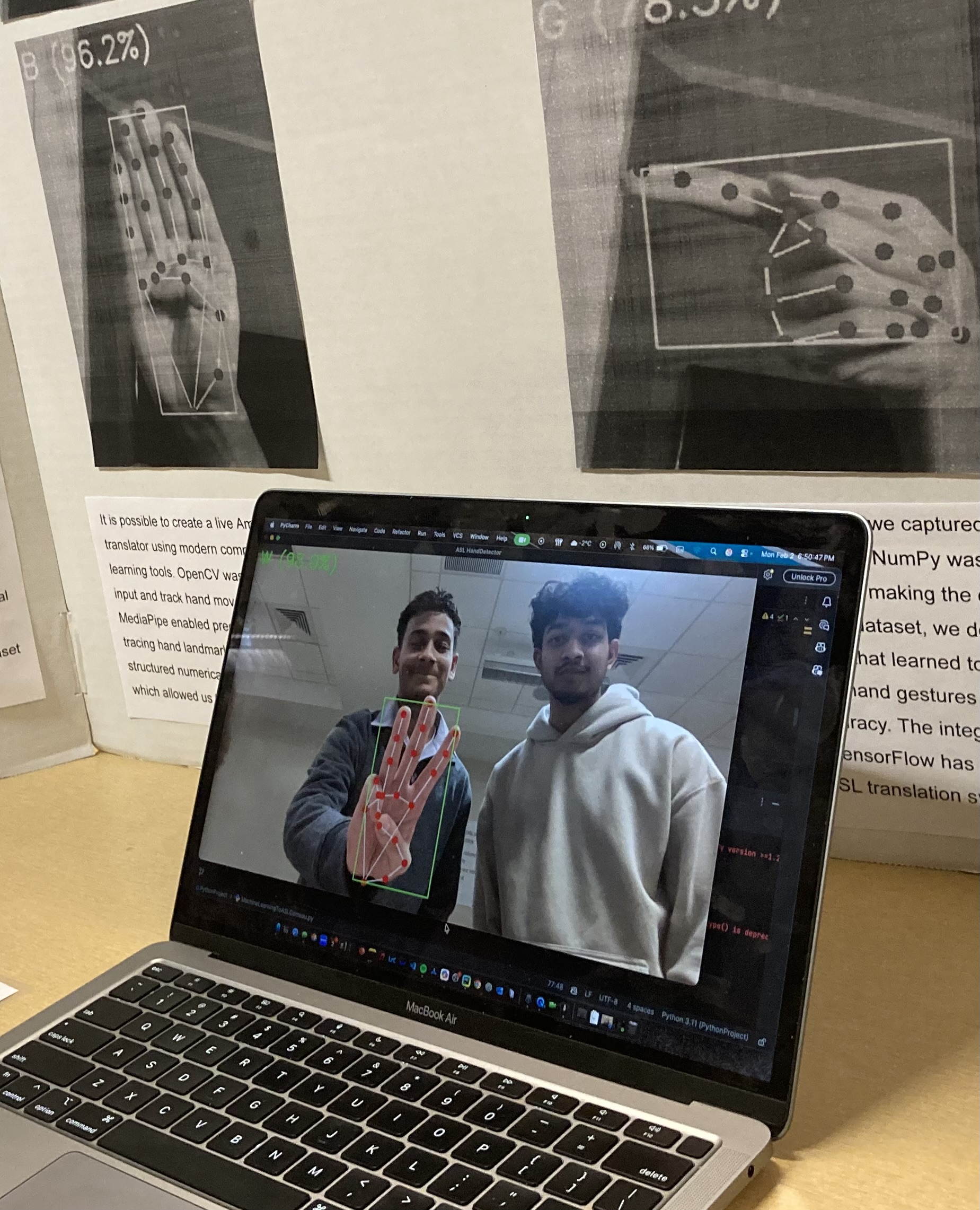
A Computer Science category made its debut at this year’s fair! Here, Erving Disla (left) and Tanzim Mahmud created an off-line webcam that “translates” hand-created American Sign Language letters. They explained that 3 out of every 1,000 U.S. residents are hearing-impaired and this project helps close the communication gap!
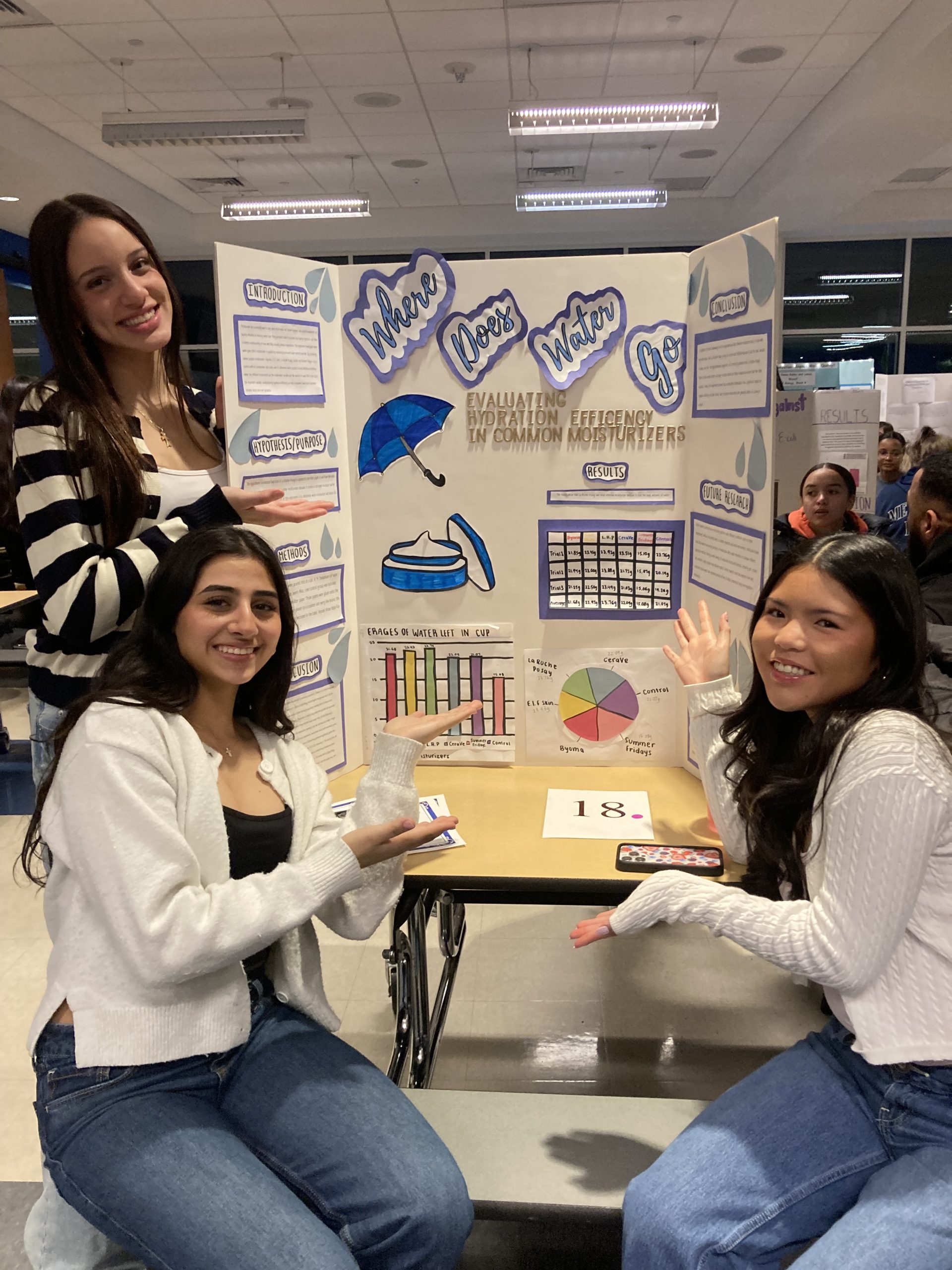
Sophia Cabral, Marisa Safi and Olivia Nguyen tested popular moisturizers (Cerave, Summer Fridays, Byoma, etc.) to find out which ones maintained their hydration. Their experiments showed that the cheapest one – LaRoche Posay – retained the most water.
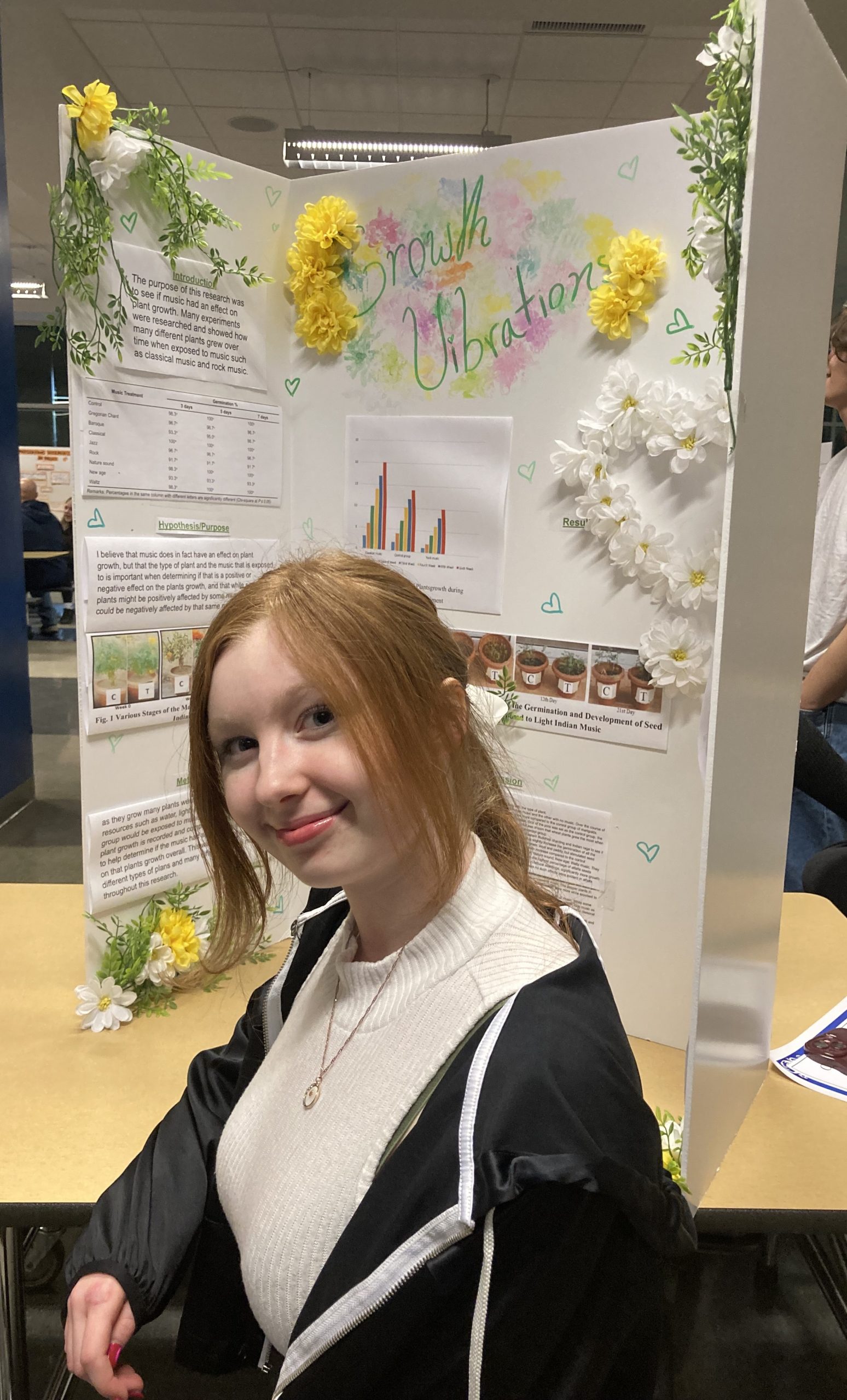
Lila Smith’s pretty “Growth Vibrations” project studied plants’ response to different types of music. For example, marigolds grow significantly more when classical music (Gregorian chants and Baroque) fills the air, but their growth slows when surrounded by harsher sounds (like rock music).
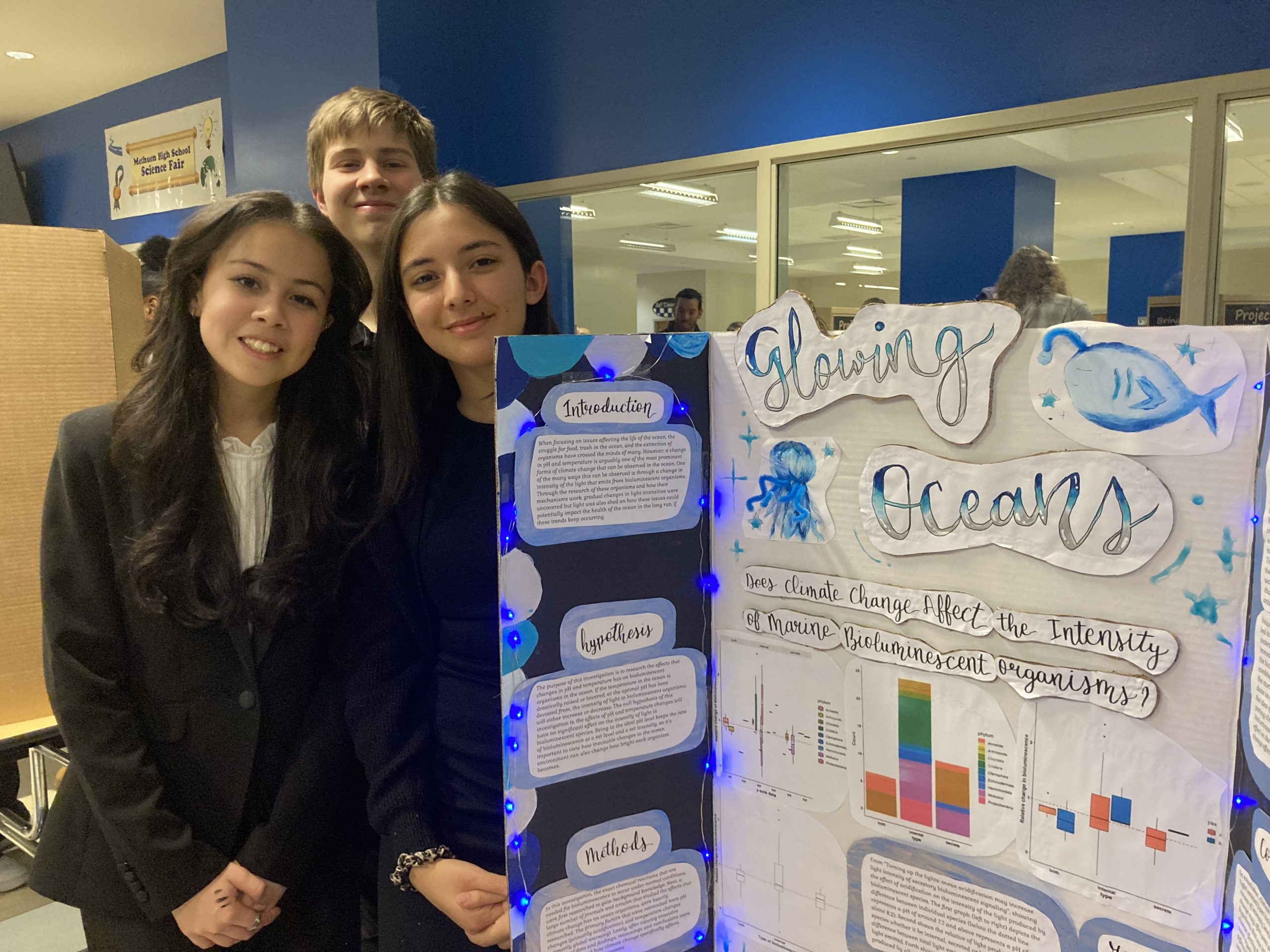
The team of Gabriela Guardado, Jeremy Patterson and Rokiya Boulal presented “Glowing Oceans: Does Climate Change Affect the Intensity of Marine Bioluminescent Organisms?” The short answer: Yes.